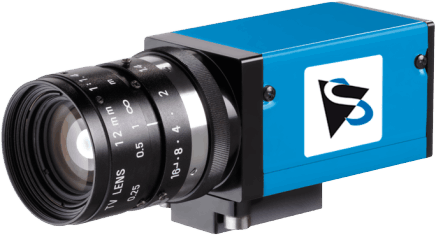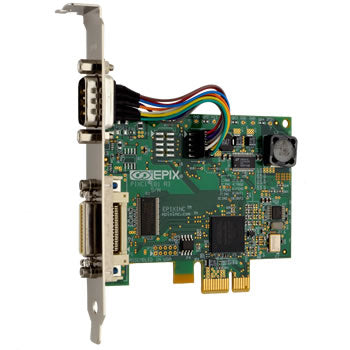
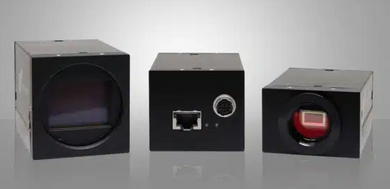
Artcam USB2.0 cameraFirewire or USB2.0 this is the question?

Many people have asked us if it is better to buy a digital camera
with firewire (IEEE1394) or USB2.0 interface. The answer is it is very application
dependent.

Q How easy is it to install a USB camera?

A USB2.0’s main attraction is that it makes adding peripherals to your computer
incredibly easy. It enables you to connect your camera to the outside of the
computer so you don't have to open your PC. A USB2.0 camera simply plugs right
into the port and works. You don’t need to install a card; you don’t even need to
turn off your computer—USB2.0 devices are completely hot-swappable. Because
USB also distributes power, many cameras don’t require a separate power supply,
although a bus-powered device must be attached upstream to either a host PC
or a separate power supply.

Q Will a USB2.0 camera work with any type of USB2.0 port on my PC?

A  No. You need to know the USB2.0 must be “native” on the motherboard:  USB2
PCI cards (desktops) and USB2 PC cards (laptops) will not support the camera acquisition.

Q Can you tell me more about USB2.0?

A Hi-Speed USB 2.0, has gained wide acceptance in the camera industry for high
speed image streaming to PCs. It increases the speed of the camera -to-PC
connection from 12 Mbps to 480 Mbps, or 40 times faster than USB 1.1. This
increase in bandwidth enhances the use of external peripherals, such digital
cameras that require high throughput.

Q Can you tell me about Firewire™ or IEEE1394?

ISG FireWire camera

The IEEE 1394 standard is a fast, scalable, low-cost digital interface. Originally conceived by Apple® Computer and developed within the IEEE 1394 Working
Group. It is generally referred to as FireWire™— the Apple trademarked name—although other companies may use different names, such as I-link and Lynx,
to describe IEEE 1394.


Q OK so both USB2.0 and IEEE1394 offer high speed data transfer and
from what you said earlier USB2.0 seems really easy to use so when
should I use a firewire camera instead?

A Because FireWire is a peer-to-peer interface, it makes it possible to dub from
one device (a digital video camera, for instance) to another without a computer.
It also enables multiple computers to share a given peripheral without any special
support in the peripheral or the computers.

FireWire supports data rates of 100, 200, and 400 Mbps, (and recently extending
beyond Gbps although camera technology has to catch up before these high
data rates could be useful in industrial imaging).
 It supports up to 63 devices
with a maximum cable length of 4.5 meters between devices. The maximum
number of hops in a chain is 16 for a total maximum end-to-end distance of 72
meters. The IEEE 1394 standard supports daisy chaining and branching or
peer-to-peer implementations. Connections can be free-form, mixing branches
and daisy chains.

In addition to its high speed, FireWire supports isochronous, as well as asynchronous,
data delivery, providing a guaranteed data rate without lags or slowdowns.
Because the standard supports guaranteed delivery of time-critical data, it enables
applications to use smaller buffers, lowering costs.

This makes it ideal for applications such as digital video transmission, which
demands real-time data transfer. FireWire cable is lightweight, flexible, and
inexpensive—a vast improvement over bulky and expensive LVDS or Cameralink
cables.

Q Ah! YES cabling. I have heard there are two types of firewire connection.
Is that right?

A  Yes. There are two types of FireWire connectors: 6-pin and 4-pin. The 6-pin
connector, usually found on computers, provides two pairs of wires for signals
and one pair of wires to provide power to external equipment. Most FireWire
cameras draw their power directly from the interface.

Q So how would summarise the differences between IEEE1394 and USB2.0
when related to camera technology?

A While USB2.0 and FireWire (IEEE1394) seem similar, they are intended to
fulfill different market and cost needs. IEEE1394 has the potential to move
more data in a given amount of time. Applications that are best suited for
IEEE1394 are moving high resolution images at the highest possible speed
within the bandwidth limitation and are ideal for industrial applications where
external control of image capture is required. USB2.0 is appropriate for
applications do not make heavy demands on the bandwidth.

For information on the cameras available with FireWire or USB2.0 interfacing
please visit the
camera section of our web site.

To return to the FAQs & Applications Main Menu, click here...


ALRAD IMAGING

Alder House Turnpike Road Industrial Estate, Newbury, Berkshire RG14 2NS

01635 30345


PRODUCTS
EXTERNAL LINKS
IPOT/MACHINE VISION
PHOTONICS CLUSTER
PHOTONEX
EMC UK
OPTICS PAGES
UKIVA